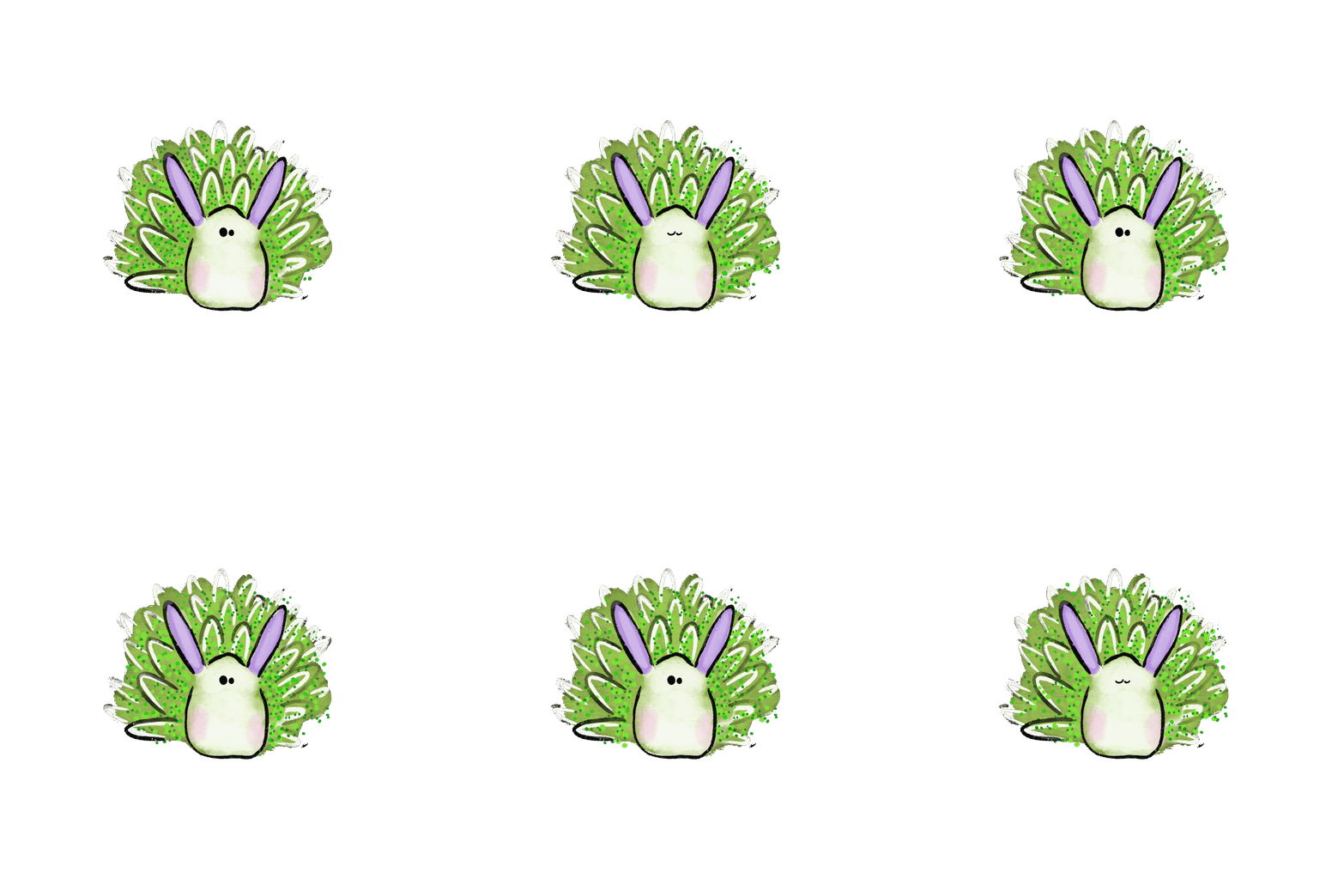
NUDI GILL PIN-UP: California Sea Hare

Happy Holidays, everyone! I received the best Christmas present ever this year. I got to hang out at the beach with a whole hoard of sea hares. That’s right, I was poking around the rocks off the Dana Point jetty at low tide. I was marveling at the tiny anemones and itty bitty shrimp, when low and behold, my eyes focused in on a real live bonafide sea slug. I squealed with delight like a four-year-old on Christmas morning.

California Sea Hare

Hey, guess what? Bonnie Kelso, author of Nudi Gill, took this picture!

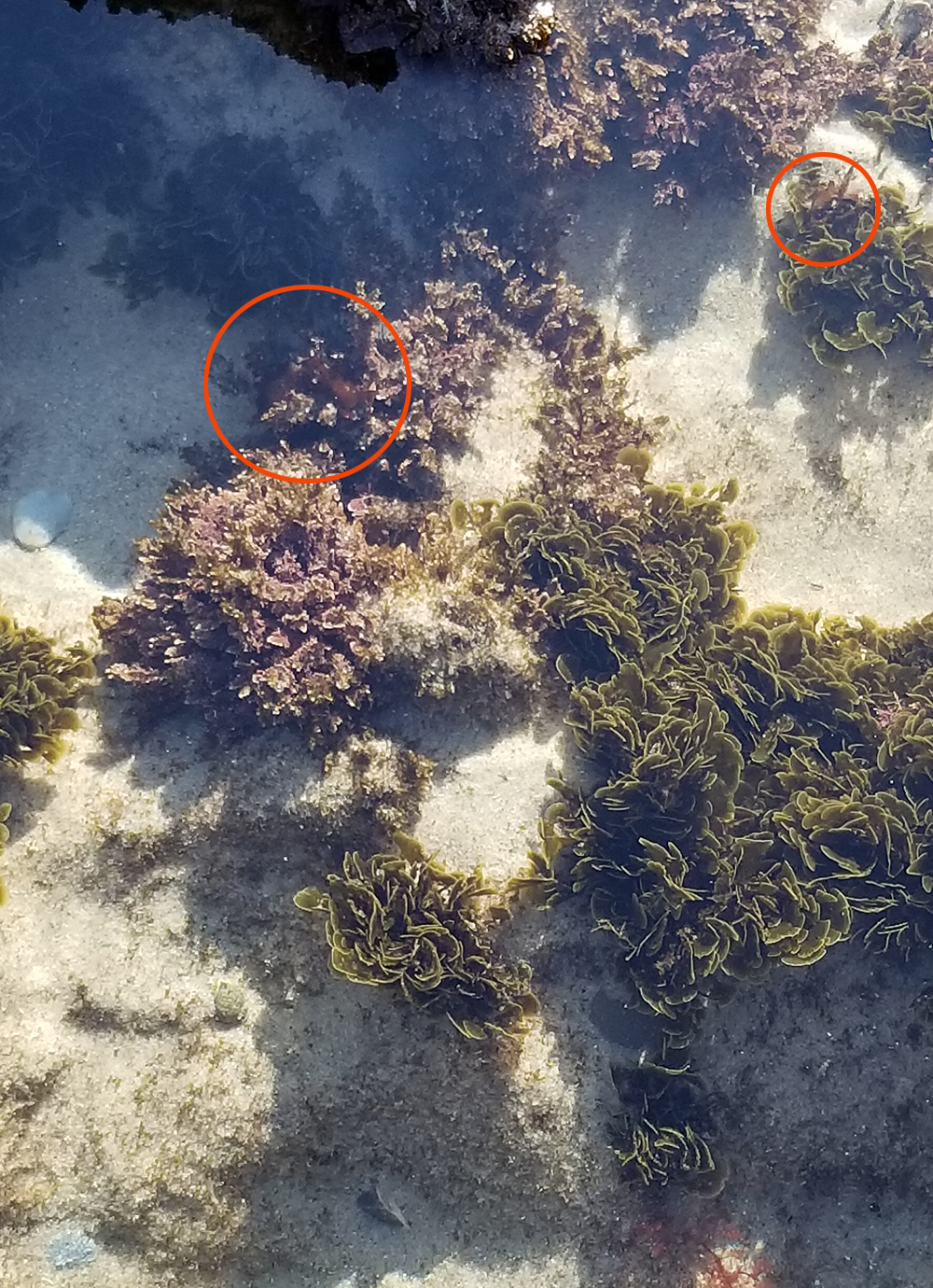
This little guy was only about two inches long and perfectly camouflaged among the reddish brown seaweed clinging to the rocks, so it’s no wonder I didn’t notice them right away.

Once I discovered this one, oh my, I started seeing them EVERYWHERE! I was literally surrounded by them. Some were even rearing, which got me super excited. It was the perfect way to end a year of Nudi Gill Pin-Ups. You may or may not remember that in January, I covered the California Sea Hare, otherwise known as: Aplysia Californica. So to me it was a perfect bookend for a year of exploring different sea slugs.

Can you find the sea hares in this photo?
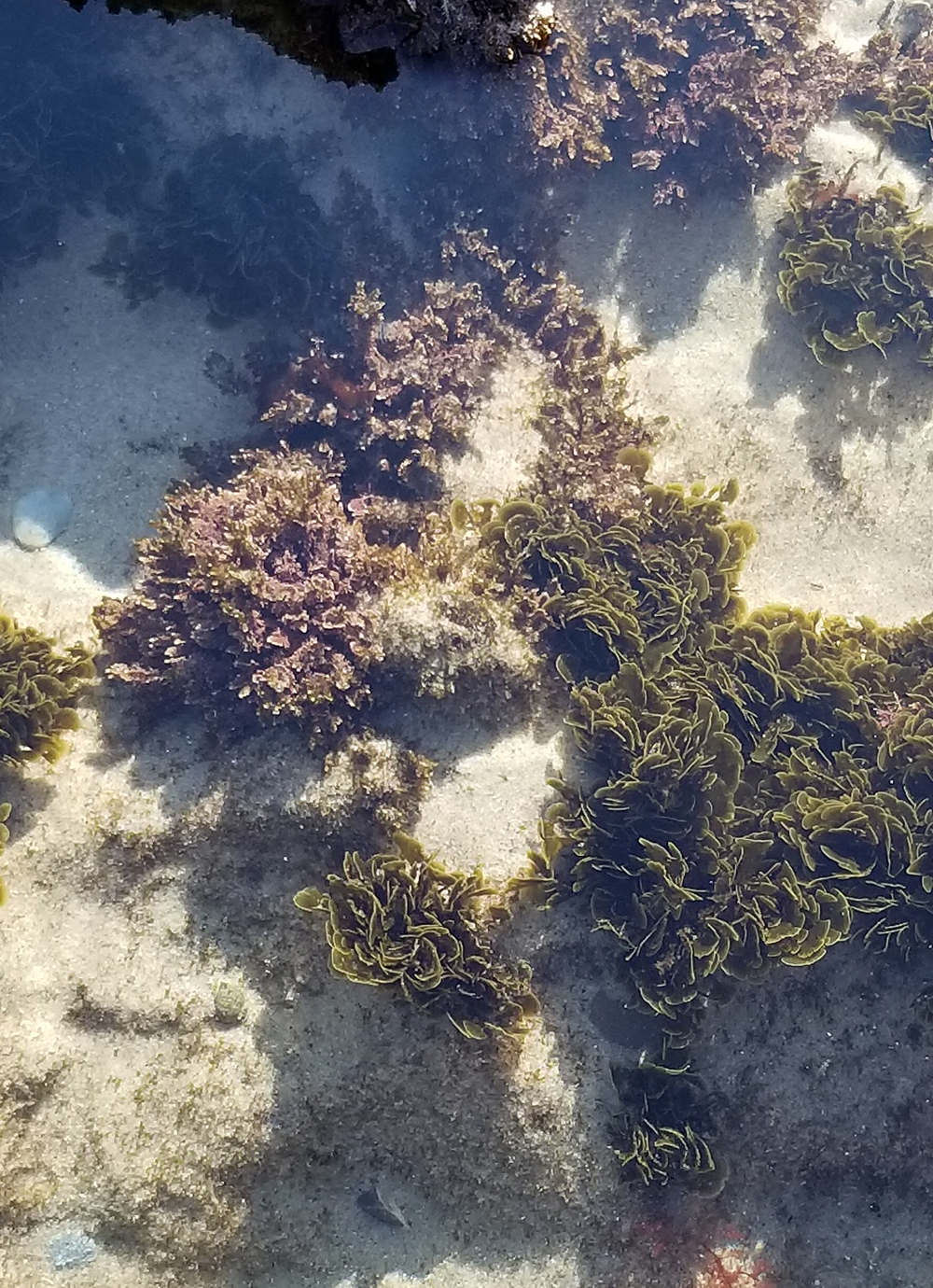
I’ll give you a hint. There are two.


California Sea Hares are not endangered. In fact, when you see a bunch of them in one area it’s a sign that the ecosystem is healthy. Even so, you should never handle them. They have a slimy coating that protects them from disease and touching them could disrupt those life-saving properties. They can be dangerous, too, because like nudibranchs they absorb toxins from their food and can poison potential predators as a self-defense mechanism.

Here’s a nice little reddish one. It seemed like the smaller ones where reddish, and the larger ones where more black with white speckles or racing stripes.

Did you find the Sea Hares?


I told you they were hard to see at first!

So you may be asking…

what’s the difference between a sea hare and a nudibranch anyway?

Why are they called Sea Hares?

They are called sea hares because they tend to have wide curled rhinophores that slightly resemble bunny ears. If you have any other questions, feel free to leave them in the comments.

Thank you for revisiting the California Sea Hare with me. I hope you have a beautiful holiday and a happy new year! See you in 2023, with yet another fascinating Nudi Gill Pin-Up.

Best wishes,
Bonnie

NOW Available for pre-order!


Bonnie Kelso writes and illustrates books for children and adults that encourage individualism and brave self-expression. She facilitates art workshops for her local community and beyond. Her debut picture book, NUDI GILL, releases in March, 2023. A lover of nature and travel, she often wanders about outside with her family whenever an excellent opportunity to do so presents itself.

NUDI GILL PIN-UP: Costasiella Kuroshimae (AKA Sea Sheep)

November is a great time to practice gratitude. I am so grateful that Nudi Gill is now available for pre-order!

I am also grateful to you for reading my blog. Today I have a special guest. Everyone’s sweetheart…

Costasiella Kuroshimae

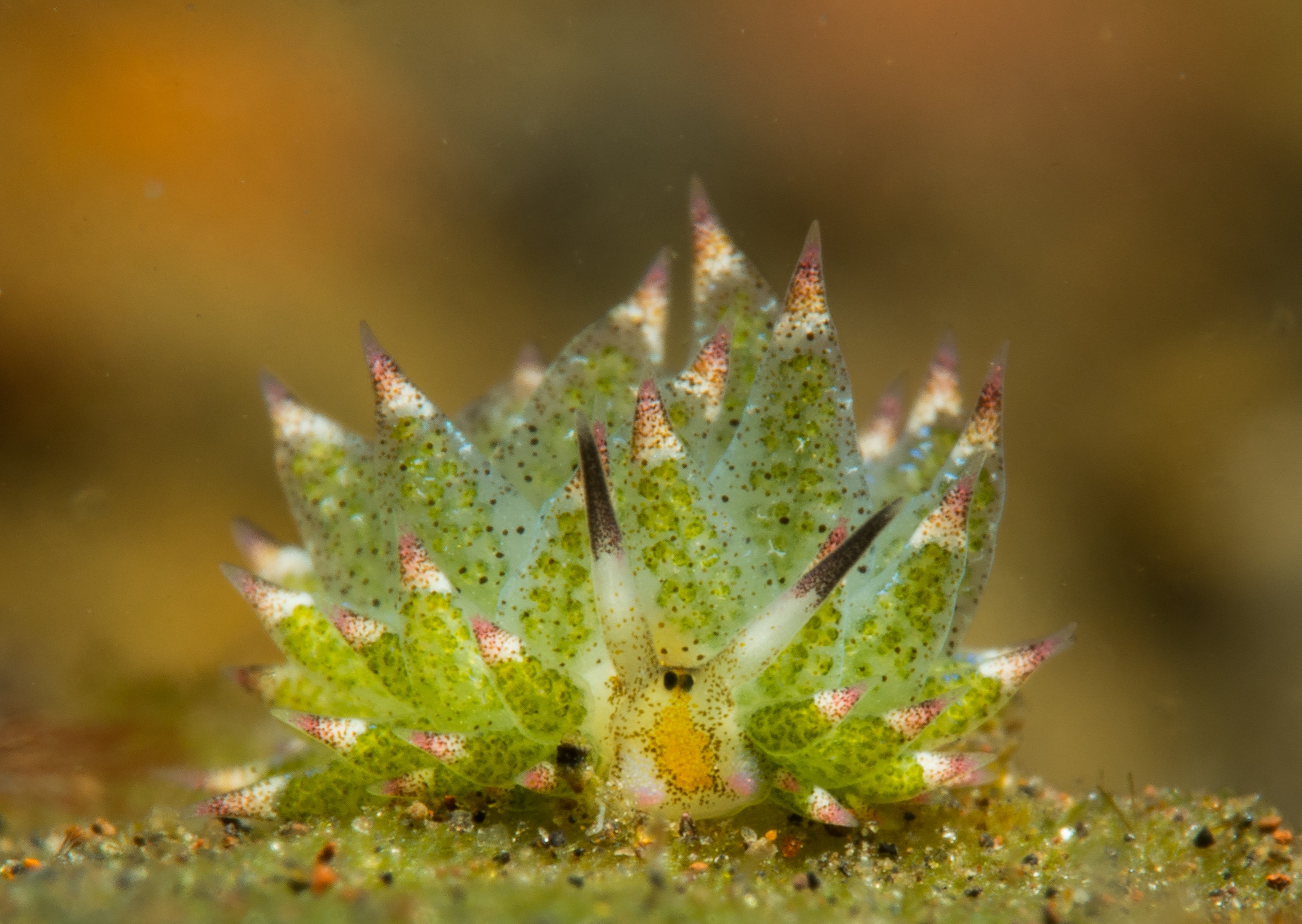
By alif_abdulrahman – Costasiella Kuroshimae, CC BY-SA 2.0, https://commons.wikimedia.org/w/index.php?curid=41894580

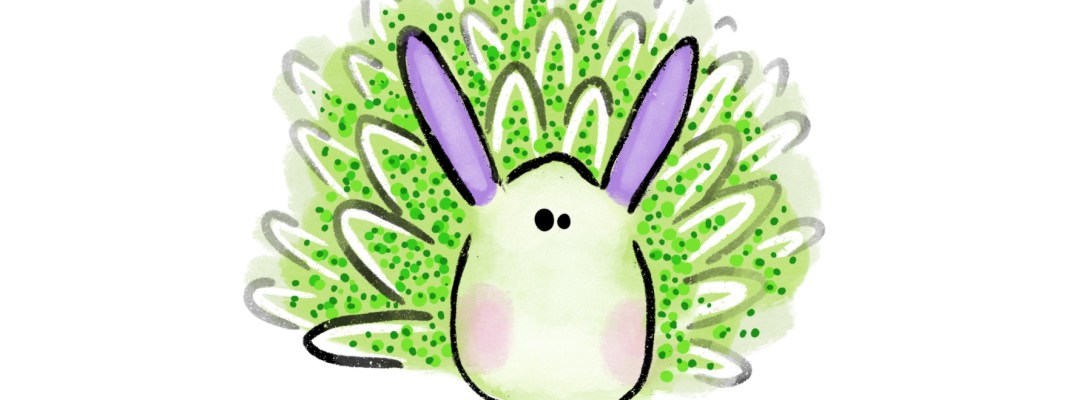
Costasiella Kuroshimae is not a nudibranch, but I felt like they had to be included in this series of pin-ups, because come on…. look at that face! The beloved Sea Sheep is in fact a sacoglossan sea slug. These little cuties are solar-powered and prefer a modest diet of algae. Here’s a little pop quiz for you:

In attempt to keep you from seeing the answer, I will bombard the page temporarily with adorable images of Sea Sheep.

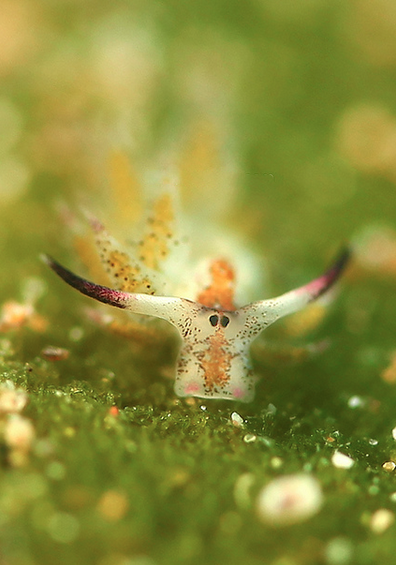
By Jun V Lao – Own work, CC BY-SA 4.0, https://commons.wikimedia.org/w/index.php?curid=52923406

Take a look at some Sea Sheep in action:


READY FOR THE ANSWER?

Actually, algae is neither plant nor animal. It falls into its own category called protists. Likewise, the Sea Sheep falls into its own category of cuteness.

BAAAAAAAA!

These vitamin-sized cuties are small. They range from 5mm to 1cm in length. They are kleptoplastic which means that they feed on algae and can store the algae’s chloroplasts in their cells. This is how they are able to photosynthesize energy and nutrients from sunlight.

They were originally discovered in Japan. Their scientific name Kuroshimae refers to Kuroshima, Japan. It is a small southern island not too far from Taiwan. Since then, Sea Sheep have been found in other locations, including Indonesia, New Caledonia, Papua New Guinea, Northern Australia, and Singapore.

HEY, Next time you have trouble sleeping…

try counting Sea Sheep!

I hope you enjoyed oohing and awwwing over November’s sheepy sweetie of a supermodel pin-up, Costasiella Kuroshima. Stay tuned for December’s festive pin-up. You won’t want to miss it!

Gratefully yours,

Bonnie

NOW Available for pre-order!


Bonnie Kelso writes and illustrates books for children and adults that encourage individualism and brave self-expression. She facilitates art workshops for her local community and beyond. Her debut picture book, NUDI GILL, releases in March, 2023. A lover of nature and travel, she often wanders about outside with her family whenever an excellent opportunity to do so presents itself.